

![Florida Tax Planning – Residency, IRS & Multi-State Risk [2026 Guide]](https://www.cpapilot.com/blog/wp-content/uploads/2026/02/Florida-Tax-Planning.png)

SaaS Tax Planning Strategies for Software Companies & Startups

[Last Updated on 20 hours ago]
Why do SaaS companies need specialized tax planning strategies instead of traditional business tax advice?
SaaS companies generate revenue through:
- Subscription models,
- Recurring billing, and
- Digital services are delivered across multiple states.
These characteristics create tax and compliance challenges that traditional businesses rarely face.
TL;DR — SaaS Tax Planning Strategies
- SaaS companies face unique tax challenges: Subscription revenue, digital delivery, and nationwide customers create tax scenarios different from traditional businesses.
- Understand how SaaS companies are taxed: Federal income taxes depend on the business entity structure, while subscription revenue affects how income is reported.
- Track sales tax and economic nexus: SaaS companies may need to collect sales tax in states where sales exceed thresholds such as $100,000 in revenue or 200 transactions.
- Leverage R&D tax credits: Software development activities may qualify for federal R&D tax credits, helping SaaS companies reduce payroll or income taxes.
- Maximize deductible SaaS expenses: Cloud infrastructure, engineering salaries, software subscriptions, and operational costs often qualify as deductible business expenses.
- Choose the right entity structure: Many SaaS startups adopt C-corporation structures when raising venture capital or issuing employee equity.
- Monitor multi-state tax exposure: Expanding customer bases can trigger tax filing obligations in multiple jurisdictions.
Use AI-powered tax tools: AI solutions help CPAs analyze tax regulations, automate research, and deliver faster tax planning insights for SaaS clients.
SaaS companies must manage deferred revenue in accordance with ASC 606, track software development expenses, and assess eligibility for R&D tax credits while ensuring compliance with evolving multi-state sales tax and economic nexus rules.
As many SaaS startups begin selling nationwide early in their growth cycle, they often trigger tax obligations in several jurisdictions at the same time.
At the same time, the tax advisory industry faces a growing talent shortage, with more than 300,000 accountants and auditors leaving the profession between 2019 and 2022, reducing the workforce by roughly 17% (Source).
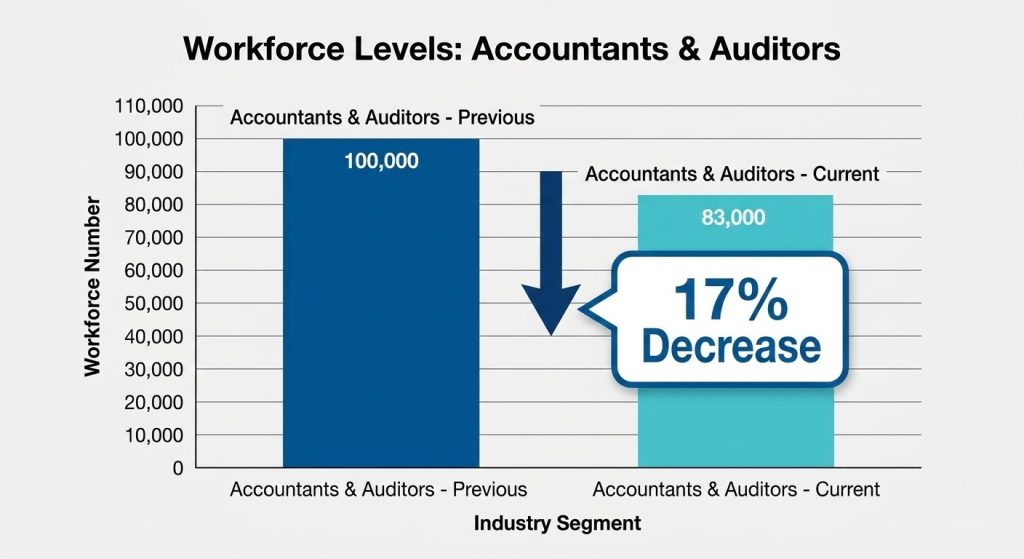
As demand for tax expertise continues to rise while experienced professionals exit the field, CPA firms must manage increasingly complex tax scenarios with fewer resources available.
These factors make SaaS tax planning strategies essential for founders, finance teams, and tax professionals supporting high-growth software businesses before addressing the specific challenges SaaS companies face.
Table of Contents
- Why SaaS Companies Face Unique Tax Planning Challenges?
- How SaaS Companies are Taxed in the United States?
- SaaS Sales Tax Rules and Economic Nexus Explained
- Key SaaS Tax Planning Strategies for Growing Software Companies
- Choosing the Best Entity Structure for SaaS Startups
- How AI Tools Help CPAs Improve SaaS Tax Planning?
Why SaaS Companies Face Unique Tax Planning Challenges?
SaaS companies face unique tax planning challenges because their business model differs from traditional product or service companies.
- Instead of selling software once, SaaS companies are delivering continuous access to cloud-based platforms through subscriptions. This structure changes how revenue flows through the business, how transactions are recorded, and how tax obligations arise across jurisdictions.
- A SaaS company can acquire customers anywhere with an internet connection. As the customer base expands across states or countries, the company may incur new tax obligations related to digital services, remote sales, and economic nexus thresholds.
The same subscription contract may also include multiple components – such as platform access, implementation services, and customer support, which can affect how transactions are treated for tax purposes. - The rapid scaling typical of SaaS businesses adds another layer of complexity. Many startups expand nationally within their first few years, creating simultaneous compliance requirements in several jurisdictions. This expansion often occurs while the company is still refining its pricing structure, billing model, and revenue strategy.
Because of these factors, SaaS companies must approach tax planning differently than traditional businesses. Their tax strategy must account for subscription contracts, digital service delivery, and the tax implications of operating across multiple regions.
Before examining the specific tax risks SaaS companies face, it is important to understand the core driver of SaaS tax complexity: the subscription revenue model itself.
The way SaaS companies price, bill, and deliver software services directly influences
- How revenue is recorded,
- How taxes apply to transactions, and
- How compliance obligations arise across jurisdictions.
How the SaaS Subscription Model Changes Tax Treatment
SaaS companies generate revenue through subscription-based access to software platforms rather than one-time product sales. Customers typically pay monthly, annually, or by usage to access a cloud-hosted application. This structure changes how transactions are recognized for both accounting and tax purposes.
- In a traditional software sale, a customer purchases a license, and the revenue event occurs at the time of sale.
- In contrast, SaaS companies deliver software continuously over a subscription contract. Because the service is provided over time, revenue must be associated with the service period rather than the payment date.
This difference creates a gap between cash received from customers and the revenue recognized for reporting and tax analysis.
Subscription contracts can also contain multiple components, such as
- Platform Access,
- Onboarding Services,
- Data Storage, and
- Customer Support.
Each element may carry different tax treatment depending on how states classify SaaS products and digital services.
Some jurisdictions treat SaaS subscriptions as taxable software services, while others classify them as non-taxable services or partially taxable digital products.
These variations mean that the structure of a SaaS subscription agreement can directly affect tax exposure. Pricing models, billing frequency, and bundled services all influence how transactions are categorized and whether they trigger additional compliance requirements across jurisdictions.
Key Tax Risks SaaS Founders Often Overlook
- One of the most common risks SaaS founders overlook is economic nexus exposure. SaaS companies can generate revenue from customers across the United States without establishing offices or employees in those states.
However, businesses can trigger tax obligations based on economic activity, such as reaching certain revenue or transaction thresholds after the South Dakota v. Wayfair Supreme Court decision in 2018. [Source]
- Another overlooked risk involves inconsistent sales tax treatment of SaaS products across states. Some jurisdictions classify SaaS subscriptions as taxable software services, while others treat them as non-taxable services.
Because each state applies its own definitions for digital products and software access, SaaS companies may unknowingly collect the wrong amount of tax or fail to register in jurisdictions where they have already triggered tax obligations. - SaaS founders also frequently underestimate the impact of software development costs on tax planning. Engineering expenses, platform development, and internal-use software investments can significantly influence taxable income depending on how these costs are categorized and recovered.
Without proactive planning, companies may miss available tax benefits or incorrectly report development expenses. - Another risk appears when SaaS startups scale rapidly across multiple jurisdictions. Hiring remote employees, expanding customer bases nationwide, and introducing new pricing models can each create additional tax filing requirements. These obligations often emerge gradually, making them easy to overlook until compliance gaps appear.
Because SaaS businesses grow quickly and operate digitally, tax exposure can accumulate silently across several areas at once. Identifying these risks early allows founders and finance teams to build tax strategies that support sustainable growth rather than reacting to compliance issues after they arise.
Differences Between SaaS and Traditional Software Taxation
| Tax Dimension | SaaS Companies | Traditional Software Companies |
|---|---|---|
| Revenue Model | Revenue is earned through recurring subscriptions for ongoing platform access. | Revenue is usually generated from one-time software license sales or packaged product purchases. |
| Delivery Method | Software is delivered through the cloud and accessed via browsers or applications. | Software is typically installed locally through downloads or physical media. |
| Tax Classification | Many states classify SaaS as a digital service or cloud-based software access, which may or may not be taxable. | Traditional software is often classified as tangible personal property or digital goods, which makes taxation more standardized. |
| Timing of Taxable Event | Tax treatment may apply to each billing cycle because continuous access is provided. | The taxable event occurs at the moment the software license or product is sold. |
| Geographic Tax Exposure | SaaS companies frequently create multi-state tax nexus due to remote digital sales. | Traditional software sales were historically tied to physical distribution channels and local markets. |
| Compliance Complexity | SaaS firms must track evolving digital-service tax rules across jurisdictions. | Traditional software taxation tends to follow more established sales-tax rules. |
SaaS businesses operate in a digital environment where subscription billing, cloud delivery, and cross-state sales create new tax considerations.
As a result, SaaS founders often need specialized tax planning strategies to remain compliant while scaling their platforms.
How SaaS Companies are Taxed in the United States?
SaaS companies are taxed based on their legal entity structure, revenue model, and the jurisdictions in which they operate. Because SaaS businesses deliver software through cloud-based subscriptions rather than one-time product sales, their tax obligations often involve federal corporate income taxes, entity-level taxation rules, and revenue recognition requirements.
For most SaaS companies, taxation can be understood through three main areas: corporate income taxes, entity structure taxation, and the treatment of subscription revenue for tax reporting purposes.
Corporate Income Taxes for SaaS Companies
SaaS companies structured as C-corporations must pay federal corporate income tax on their profits. In the United States, the federal corporate tax rate is 21%, which was established under the Tax Cuts and Jobs Act of 2017. [Source]
Corporate taxable income is calculated after deducting business expenses such as employee salaries, infrastructure costs, marketing expenditures, and software development investments. Many SaaS companies also benefit from the Research and Development (R&D) tax credit, a federal incentive designed to encourage technological innovation.
Eligible startups with less than $5 million in gross receipts can apply up to $250,000 of R&D credits annually against payroll taxes, allowing early-stage companies to reduce tax liability even before becoming profitable. [Source]
As a result, SaaS companies that exceed revenue or transaction thresholds in a state may be required to register, collect taxes, and file returns in that jurisdiction.
Pass-Through vs C-Corporation Taxation for SaaS Companies
Some SaaS businesses operate as pass-through entities, such as Limited Liability Companies (LLCs) or S corporations. In these structures, the business itself does not pay federal income tax. Instead, profits pass through to the owners and are reported on their individual tax returns.
Pass-through structures can benefit early-stage SaaS startups because they avoid double taxation, which occurs when corporate profits are taxed at the corporate level and again when distributed to shareholders as dividends.
However, many high-growth SaaS startups convert to C-corporations as they expand and raise venture capital funding. Venture investors typically prefer C-corporations because they support equity financing, stock option plans, and scalable ownership structures.
Pass-Through vs C-Corporation Taxation for SaaS Companies
Subscription revenue affects how SaaS companies calculate taxable income and manage cash flow throughout the year. Because SaaS businesses receive recurring payments from customers, the timing of when revenue becomes taxable can influence overall tax liability.
For example, some SaaS companies receive large upfront subscription payments, especially for annual or multi-year contracts. While the cash is received immediately, tax rules may allow companies to recognize the income over the service period instead of reporting it all in the same tax year.
This treatment helps align taxable income with the period during which the service is delivered.
The IRS allows certain businesses to defer advance payments for services to the following tax year under specific accounting methods, which can improve short-term cash flow and reduce immediate tax exposure. [Source]
For SaaS companies managing thousands of subscription contracts, the tax treatment of recurring revenue can significantly affect profitability reporting, tax timing, and financial planning decisions
While income taxes determine how SaaS companies report profits, another major layer of taxation affects how subscription software is sold to customers. SaaS businesses must also navigate sales tax rules that vary across U.S. states, particularly when selling subscriptions to customers in multiple jurisdictions.
Understanding how sales tax applies to SaaS platforms—and when a company becomes responsible for collecting it—is essential for avoiding compliance risks as the business scales.
SaaS Sales Tax Rules and Economic Nexus Explained
SaaS sales tax obligations depend primarily on
- Where the customer is located and
- How each state classifies cloud software or digital services.
Because SaaS products are delivered remotely through the internet rather than as physical software, states apply different tax rules when determining whether subscriptions are taxable.
For SaaS companies selling software nationwide, understanding state taxability rules, economic nexus thresholds, and sales tax compliance requirements is essential to avoid penalties and maintain regulatory compliance.
When SaaS is Taxable in Different States?
States determine whether SaaS is taxable based on how they classify cloud-based software access. Some states treat SaaS subscriptions as taxable prewritten software, while others consider them non-taxable services.
For example:
- New York Tax Planning and Texas Franchise Tax generally treat SaaS subscriptions as taxable software services.
- Other states classify SaaS as a service and may not impose sales tax.
Because SaaS software is hosted remotely rather than transferred directly to the customer, tax authorities evaluate factors such as:
- The location of the customer
- Where the software is accessed
- How the service is delivered
Due to these differences, SaaS companies must determine tax obligations based on customer location rather than company headquarters.
Economic Nexus Thresholds for SaaS Companies
Economic nexus determines when a SaaS company must collect and remit sales tax in a state even without having a physical presence there. Today, most U.S. states require remote businesses to collect sales tax once their economic activity in the state exceeds specific thresholds.
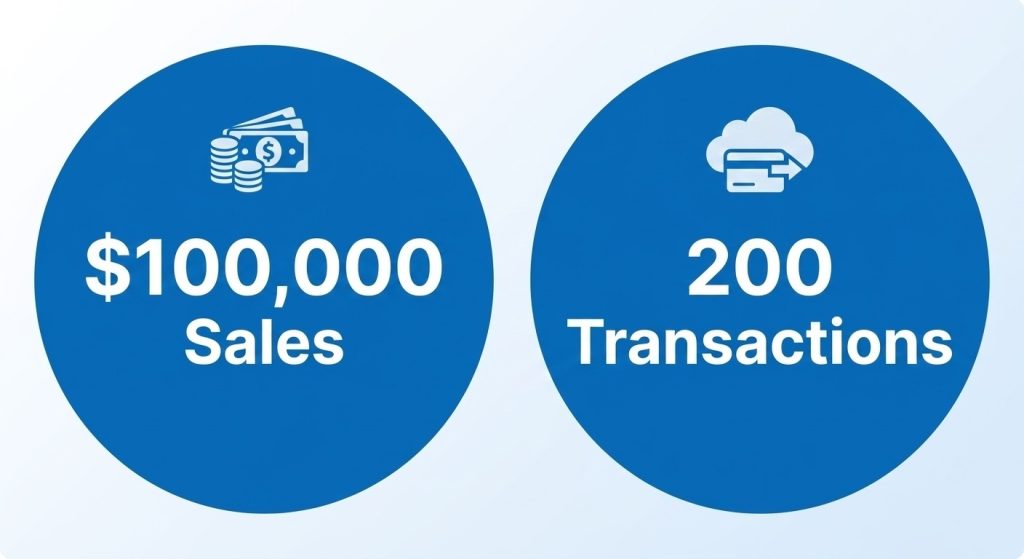
Typical nexus thresholds include:
- $100,000 in annual sales within a state, or
- 200 separate transactions with customers in that state
Once a SaaS company exceeds these limits, it generally becomes responsible for registering for sales tax, collecting the appropriate tax from customers, and filing periodic tax returns in that jurisdiction.
These thresholds were introduced after states adopted economic nexus standards for remote sellers, allowing tax obligations to be triggered by sales activity rather than physical presence. [Source]
For SaaS businesses that sell subscriptions nationwide, monitoring revenue levels across states is essential because crossing nexus thresholds can quickly create tax obligations in multiple jurisdictions.
Sales Tax Compliance Requirements for SaaS Subscriptions
When SaaS companies establish nexus in a state, they must follow that state’s sales tax compliance requirements.
This usually involves:
- Registering for a state sales tax permit
- Charging the correct sales tax rate based on customer location
- Filing periodic sales tax returns
- Remitting collected taxes to the appropriate state authority
Because SaaS companies often serve customers across multiple jurisdictions, managing compliance may require tracking several state tax rules and filing deadlines simultaneously.
Common SaaS Sales Tax Mistakes to Avoid
Many SaaS companies encounter sales tax issues when they expand quickly without monitoring their state tax obligations.
Common mistakes include:
- Assuming SaaS subscriptions are not taxable in any state
- Failing to track economic nexus thresholds
- Charging incorrect tax rates based on customer location
- Delaying tax registration after crossing nexus thresholds
These mistakes can result in penalties, interest charges, and retroactive tax liabilities if discovered during state audits.
For SaaS companies operating across multiple states, proactively monitoring sales tax obligations helps ensure compliance as the business grows.
Understanding how SaaS companies are taxed and how sales tax obligations arise is only the first step. The next priority for founders and tax professionals is identifying practical strategies that reduce tax liability while supporting long-term growth.
Key SaaS Tax Planning Strategies for Growing Software Companies
The following strategies are commonly used by SaaS companies to reduce tax liability while maintaining compliance.
- Claiming R&D Tax Credits for SaaS Development
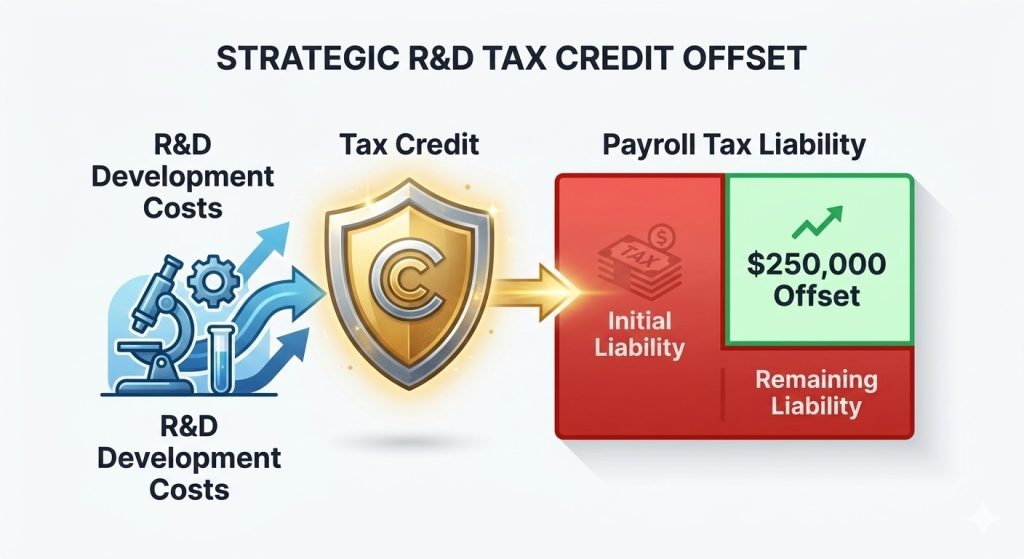
Many SaaS companies qualify for the federal Research and Development (R&D) tax credit, which rewards businesses that design or improve software products, algorithms, or technological processes.
Qualifying activities may include:
- Developing new software features
- Improving platform performance or scalability
- Creating new algorithms or machine learning models
- Enhancing cybersecurity or system architecture
Early-stage companies can also benefit from a special provision that allows eligible startups to apply up to $250,000 of R&D credits annually against payroll taxes, even if the company has not yet become profitable. [source]
For SaaS startups with large engineering teams, properly documenting development activities can significantly reduce overall tax liability.
- Common Tax Deductions for SaaS Businesses
SaaS companies incur a wide range of operational expenses that may be deductible for tax purposes. Properly categorizing these costs can reduce taxable income and improve overall cash flow.
Common deductible expenses include:
- Software development costs
- Cloud infrastructure and hosting fees
- Employee salaries and contractor payments
- Marketing and customer acquisition costs
- Office expenses and business software subscriptions
Accurately tracking these deductions is especially important for SaaS companies because operational spending often represents a significant portion of early-stage budgets.
- Payroll Tax Optimization for SaaS Engineering Teams
Payroll costs are typically one of the largest expenses for SaaS companies due to the need for skilled software engineers, product managers, and infrastructure specialists.
Tax planning strategies may include:
- Utilizing R&D payroll tax credits
- Structuring compensation packages efficiently
- Managing equity compensation, such as stock options
Because compensation structures can affect both company tax liability and employee taxation, careful payroll planning helps SaaS companies maintain cost efficiency while attracting technical talent.
- Managing Multistate Tax Exposure for SaaS Companies
As SaaS companies acquire customers nationwide, they may trigger tax obligations across multiple jurisdictions. Managing this exposure requires monitoring sales activity and maintaining compliance with state tax requirements.
Effective strategies include:
- Tracking revenue thresholds across states
- Registering for tax permits when nexus thresholds are met
- Implementing systems to monitor sales tax obligations
By proactively managing multistate tax exposure, SaaS companies can avoid penalties and maintain consistent compliance as their customer base expands.
Tax planning strategies help SaaS companies reduce their overall tax liability, but another important decision influences how profits are taxed from the beginning: the legal business structure. Choosing the right entity structure affects corporate taxation, investor funding, and how founders report income.
Choosing the Best Entity Structure for SaaS Startups
The legal structure of a SaaS company influences ownership structure, investment opportunities, and long-term tax strategy. While early-stage startups often prioritize operational simplicity, the entity structure becomes increasingly important as the company raises capital, expands its workforce, and scales its operations.
Choosing the appropriate structure requires evaluating factors such as fundraising goals, equity distribution, governance requirements, and long-term exit planning.
C-Corp vs LLC for SaaS Startups
Many SaaS startups initially choose a Limited Liability Company (LLC) because it offers flexible management structures and simplified administrative requirements. LLCs allow founders to structure ownership arrangements easily during the early stages of product development.
As SaaS companies grow, however, they often transition to a corporate structure to support external investment and scalable ownership models. Corporations allow businesses to issue different classes of stock, implement employee equity programs, and formalize governance structures that investors expect.
Because of these structural advantages, corporate entities are commonly adopted as SaaS companies prepare for larger funding rounds.
For more details, see our post: S Corp vs C Corp vs LLC
Why Venture-Backed SaaS Startups Incorporate in Delaware?
Venture-backed SaaS companies frequently incorporate as Delaware C-corporations because Delaware provides a legal framework for corporate governance and investor protection.
Key advantages include:
- A specialized Court of Chancerythat handles business disputes
- Well-established corporate case law
- Flexibility in issuing preferred and common shares
- Streamlined processes for mergers and acquisitions
These characteristics have made Delaware the preferred incorporation state for many high-growth technology companies.
For SaaS companies planning to raise venture capital or pursue future acquisitions, incorporating in Delaware can simplify investor negotiations and corporate structuring.
Tax Implications of Equity Compensation for SaaS Employees
Equity compensation plays a major role in SaaS startups, especially when attracting engineers, product managers, and early employees. Companies often offer stock options or restricted stock units (RSUs) to align employee incentives with company growth.
However, equity compensation introduces several tax considerations, including:
- Taxation when stock options are exercised
- Holding period requirements for favorable capital gains treatment
- Potential exposure to the Alternative Minimum Tax (AMT) for certain option types
The IRS provides guidance on how employee stock options are taxed. [Source]
Understanding these tax implications helps SaaS companies design compensation packages that support talent acquisition while maintaining compliance with tax regulations.
How AI Tools Help CPAs Improve SaaS Tax Planning?
AI is increasingly helping tax professionals manage the complexity of SaaS taxation. SaaS companies often operate across multiple states, rely on subscription revenue models, and must comply with evolving digital service tax rules. AI-powered Tax tools allow CPAs to analyze regulations, automate research, and deliver tax-planning insights faster than traditional manual workflows.
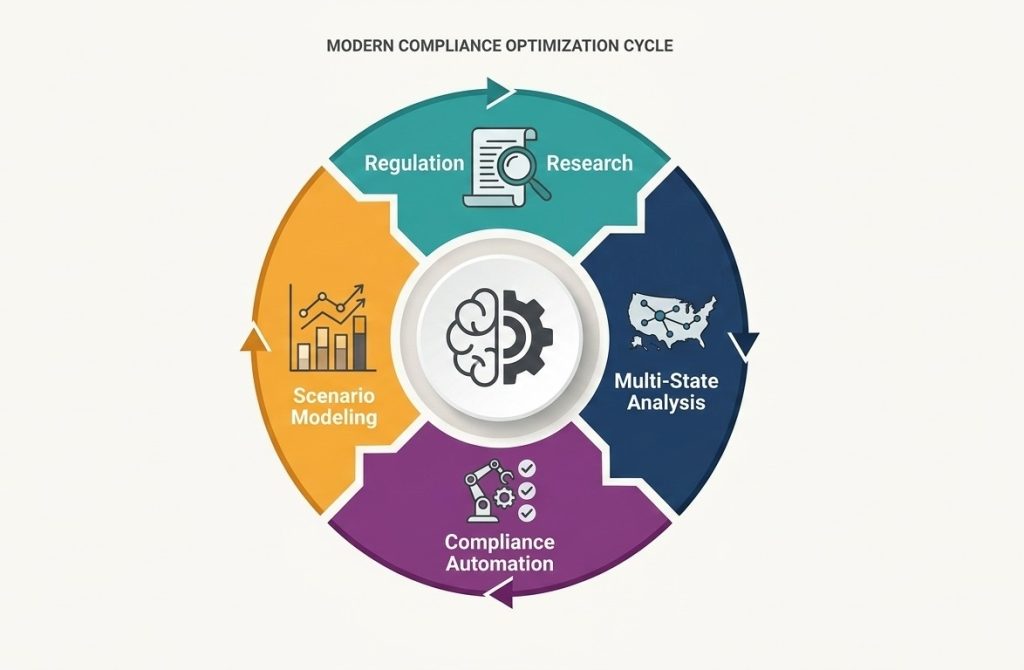
These capabilities help accounting firms improve efficiency while providing more strategic guidance to SaaS clients.
How AI Supports SaaS Tax Planning
- Regulation Research: AI systems analyze tax statutes, regulatory updates, and jurisdiction-specific rules to quickly identify relevant SaaS tax requirements.
- Multi-State Tax Analysis: AI tools help evaluate nexus thresholds, state tax exposure, and cross-border compliance obligations for SaaS companies selling nationwide.
- Compliance Automation: AI assists with document review, tax workflow automation, and monitors regulatory changes to reduce manual workload.
- Strategic Scenario Modeling: By analyzing financial data and tax rules together, AI helps CPAs evaluate planning strategies, credits, and deductions available to SaaS businesses.
- Client Communication Support: AI can generate clear explanations, summaries, and advisory insights that CPAs can use when responding to client tax questions.
Tools built specifically for tax professionals can further enhance these capabilities. CPA Pilot, an AI tax planning assistant designed for CPAs and tax firms, helps automate tax research, generate client-ready explanations, and support complex tax planning workflows.
Try now and see the difference!!!
SaaS Tax Planning FAQs
Do SaaS companies qualify for the Section 174 software development tax treatment?
Section 174 requires U.S. SaaS companies to capitalize and amortize software development costs instead of expending them immediately. Companies typically amortize domestic R&D over 5 years and foreign R&D over 15 years under current IRS rules.
Do SaaS startups qualify for the Qualified Small Business Stock (QSBS) tax exclusion?
SaaS startups structured as C-corporations may qualify for the QSBS tax exclusion. Section 1202 allows eligible shareholders to exclude up to 100% of capital gains on qualified startup stock held for at least five years.
Can SaaS companies deduct cloud hosting and infrastructure costs?
SaaS companies can deduct ordinary business expenses such as cloud hosting, server infrastructure, and platform subscriptions. These operating costs typically qualify as deductible business expenses under IRS tax rules.
Do SaaS companies need to file Form 5471 or Form 5472?
SaaS companies must file Form 5471 or Form 5472 when they have foreign ownership or controlled foreign corporations. These forms report ownership, transactions, and financial activity between U.S. companies and foreign entities.
Can SaaS founders reduce taxes using the Qualified Business Income (QBI) deduction?
SaaS founders operating through pass-through entities may qualify for the QBI deduction. Section 199A allows eligible business owners to deduct up to 20% of qualified business income, subject to income thresholds and limitations.