CPA Pilot vs Claude for Tax Research - Which is Better for CPAs in 2026? - CPA Pilot
AI Tax Assistants Comparison
CPA Pilot vs Claude for Tax Research - Which is Better for CPAs in 2026?
Compare CPA Pilot vs Claude for tax research in 2026, including citations, tax sources, SALT coverage, security, pricing, and CPA workflows.
CPA Pilot
Sep 1, 2026·16 min read
CPA Pilot and Claude can both help CPAs research tax issues, analyze documents, and prepare client-facing explanations. The difference is how each tool approaches the work.
Claude is a general-purpose AI assistant built for research, reasoning, document analysis, writing, and other business tasks. CPA Pilot is designed specifically for CPAs, Enrolled Agents, and U.S. tax firms.
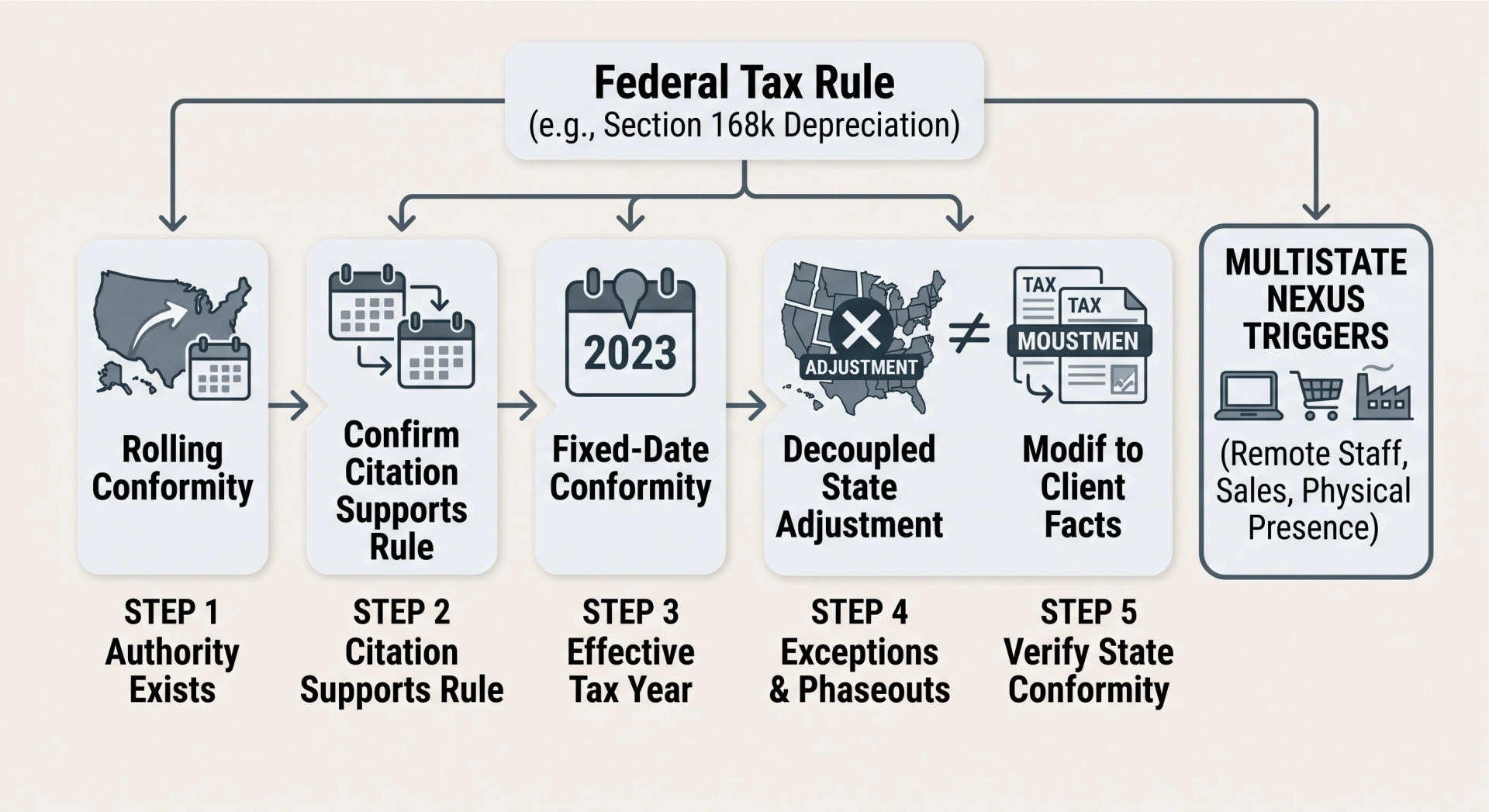
That distinction matters because professional tax research requires more than a plausible answer. A CPA must identify the relevant authority, confirm that citations support the conclusion, verify the applicable tax year, account for exceptions, determine state treatment, and apply the rule to the client's facts.
The practical question is therefore not which AI produces the most polished answer.
It is which tool creates the more efficient and verifiable tax research workflow for a CPA practice.
CPA Pilot vs Claude : Quick Comparison for 2026
Area
CPA Pilot
Claude
Primary purpose
U.S. tax research and CPA workflows
General-purpose AI assistant
Federal tax research
Dedicated workflow
Web and research-driven
State tax research
50 states plus Washington, D.C.
Broad web research
Citations
Structured tax research notes with cited sources
Web citations when search or research tools are used
Tax planning
Dedicated workflows
Prompt-driven
Long-document analysis
Supported
Major strength
Return review
Dedicated CPA workflow
Requires prompts, tools, or integrations
Client communication
Tax-focused workflow
Strong general writing capability
Security
Tax-practice-focused controls
Depends on Claude product tier and configuration
Best fit
Recurring professional tax work
Broad research, analysis, writing, and document review
Bottom line: Claude offers broader general-purpose capabilities. CPA Pilot is more specialized for recurring professional U.S. tax research and CPA workflows.
How We Compared CPA Pilot and Claude for Tax Research
We compared CPA Pilot and Claude based on the requirements of professional tax research rather than general AI response quality.
A useful AI tax research tool should help a practitioner reach a conclusion that is current, verifiable, and applicable to the client's facts. We evaluated both platforms across seven criteria:
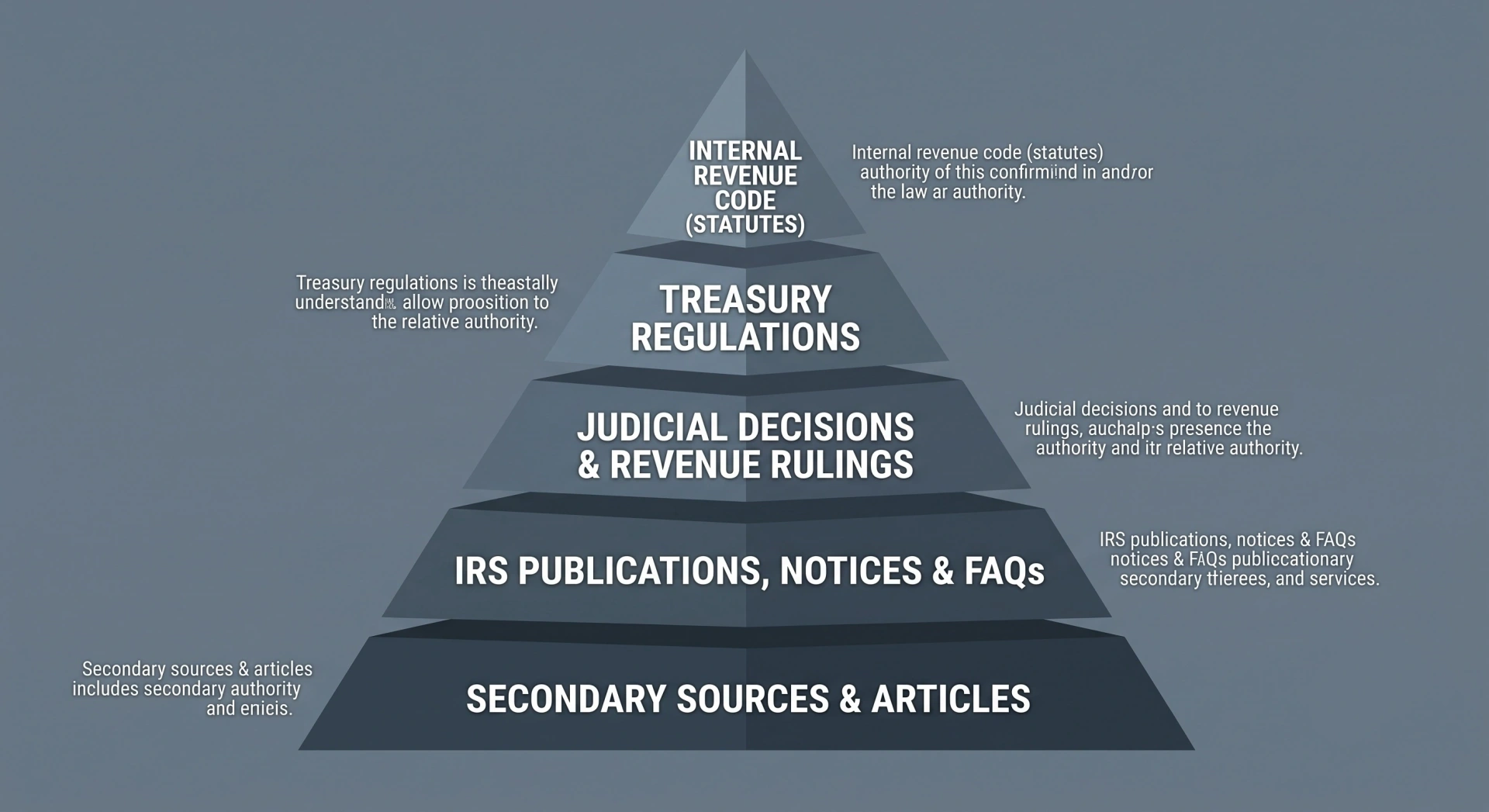
Tax source authority: We assessed whether each tool can help identify relevant sources such as the Internal Revenue Code, Treasury Regulations, IRS administrative guidance, judicial decisions, and state tax guidance. The IRS outlines these federal sources in itsTax Code, Regulations, and Official Guidance resources.
Citation verifiability: We evaluated whether practitioners can open cited sources and confirm that they support the conclusion. Citation quality matters because statutes, regulations, judicial decisions, IRS publications, FAQs, and secondary articles do not carry the same authority. The IRS explains the limitations of relying on general FAQs in its guidance on the authority of IRS FAQs.
Tax-law freshness: We considered whether the research can account for the applicable tax year, effective dates, subsequent legislation, updated regulations, new IRS guidance, and judicial developments. Current information is only useful when it applies to the year and transaction being researched.
Federal and state coverage: We evaluated federal research separately from state tax research because state conformity, nexus, sourcing rules, and state-specific adjustments can change the result. CPA Pilot states that its AI tax research assistant supports federal research and all 50 states plus Washington, D.C. Its state and multistate tax planning guide provides additional detail on nexus and multijurisdictional tax issues.
Application to client facts: We assessed how well each platform helps move from a general tax rule to a conclusion based on the taxpayer, transaction, entity, tax year, and jurisdiction.
Workflow efficiency: We considered more than response speed. The comparison also accounts for citation-checking time, corrections, duplicated research, reviewer time, and the effort required to convert research into a usable work product. CPA Pilot also provides dedicated workflows for AI tax return review and entity-selection analysis.
Data governance: We considered how the platforms handle confidential client information, including uploaded documents, prompts, generated outputs, retention settings, access controls, and product-level security configurations. Claude's capabilities and controls vary by product, so firms should verify the current configuration through Anthropic's official Claude information.
These criteria focus the comparison on the question that matters most to tax professionals: how efficiently each tool helps a practitioner move from a client-specific tax question to a verifiable professional conclusion.
What is Claude and How Can CPAs Use It for Tax Research in 2026?
Claude is Anthropic's general-purpose AI assistant. CPAs can use it to summarize tax documents, research technical questions, compare interpretations, extract facts from uploaded files, and convert technical material into client-friendly explanations.
Claude is particularly useful when a tax question overlaps with other areas such as business transactions, economics, financial reporting, industry rules, or legal developments.
Its strength is flexibility.
A CPA can upload a lengthy IRS document and ask Claude to identify definitions, summarize requirements, compare provisions, or explain technical material in plain English. That makes Claude useful for document comprehension and exploratory research.
Can Claude Access Current Tax Laws in 2026?
Claude can access current web information when web search or related research capabilities are enabled.
Anthropic describes Claude as capable of using web information and connected sources to conduct broader research. Firms evaluating Claude should review the current capabilities directly through Anthropic's official Claude documentation.
Current access does not eliminate the need to evaluate the quality of the source.
A tax answer may cite:
IRS.gov
Congress.gov
a state Department of Revenue
a court decision
an accounting publication
a law firm
a news article
another secondary source
Those sources do not carry equal authority.
Claude can therefore help locate and synthesize current tax information, but the CPA must still determine whether the cited material is appropriate authority for the position being researched.
Claude Tax Connectors and Third-Party Tax Tools
Claude's capabilities also depend on the tools connected to it.
A specialized connector or external tax engine can extend Claude beyond the capabilities of the base assistant. This creates an important distinction between:
Claude alone → Claude with web access → Claude with research tools → Claude with specialized tax integrations
A firm comparing Claude with dedicated tax software should evaluate the exact Claude configuration it plans to use rather than treating every Claude deployment as the same product.
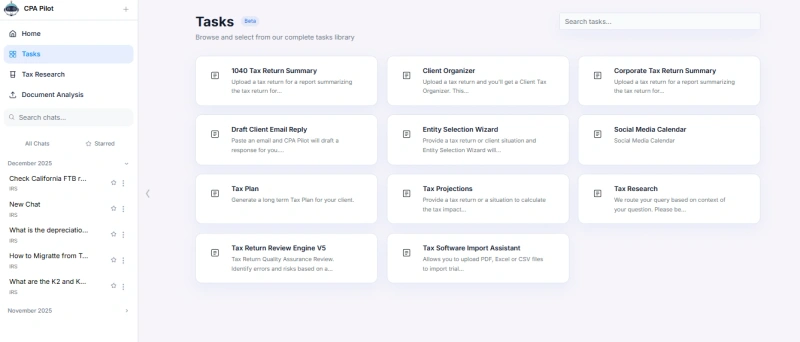
What is CPA Pilot for CPAs and Tax Professionals?
CPA Pilot is an AI workspace built around recurring workflows performed by U.S. CPAs, Enrolled Agents, and tax firms.
Its AI tax research assistant is designed to move from a tax question to organized research supported by tax-specific sources.
According to CPA Pilot's product information, the research workflow can draw from sources including:
the Internal Revenue Code
Treasury Regulations
IRS Publications
Revenue Rulings
Private Letter Rulings
state-level tax guidance
The system returns structured research notes containing relevant source references for practitioner review.
CPA Pilot also supports workflows beyond research, including tax planning, entity analysis, tax return review, IRS notice analysis, projections, return summaries, and client communications.
That design changes the starting point.
Claude begins as a flexible general AI environment that can be adapted to tax work.
CPA Pilot begins with the recurring workflow of the tax professional.
CPA Pilot vs Claude: Features Compared for Tax Research in 2026
The most important differences appear when the tools are evaluated against the requirements of professional tax research.
Federal tax research: CPA Pilot provides a dedicated tax research workflow. Claude can locate and analyze federal tax material through web research, but the practitioner has more responsibility for directing the research process.
State tax research: CPA Pilot states that its research coverage includes all 50 states plus Washington, D.C. Claude can research state sources, but it is not designed specifically as a SALT research system.
Citation workflow: Claude can provide web citations when relevant research tools are used. CPA Pilot organizes tax-specific research notes around cited authorities.
Document analysis: Claude is especially strong at summarizing and analyzing long documents. This can be useful when working through lengthy IRS guidance, contracts, financial documents, or mixed business materials.
Tax planning and return review: CPA Pilot includes dedicated CPA workflows, including tax return review and entity-selection analysis. Claude can assist with the reasoning behind these tasks, but the workflow is typically prompt-driven unless external tools are added.
Client communication: Both tools can help convert technical research into clearer explanations. Claude provides broad writing flexibility, while CPA Pilot keeps that step closer to the tax workflow.
The difference is therefore less about whether either system can discuss taxation and more about how much structure the practitioner must supply.
CPA Pilot vs Claude Tax Sources and Citations
Tax research depends on the quality of the underlying authority.
A citation is useful only when the cited source exists, applies to the issue, supports the proposition, and remains effective for the tax year being researched.
The IRS identifies statutes, Treasury Regulations, judicial authority, and published administrative guidance as important sources of federal tax law. Practitioners can review the IRS's overview of tax code, regulations, and official guidance.
Internal Revenue Code and Treasury Regulations
The Internal Revenue Code provides the statutory basis for federal taxation.
Common provisions relevant to tax research include:
IRC §1031 for qualifying like-kind exchanges
IRC §199A for the qualified business income deduction
IRC §168 for depreciation
IRC §280A for certain home and business-use rules
Identifying the correct Code section is only the first step.
A CPA may also need to review definitions, limitations, cross-references, effective dates, related provisions, and applicable Treasury Regulations.
Treasury Regulations provide official interpretations and implementation rules for Code provisions. For complex tax issues, the regulations may contain requirements or examples that cannot be determined from the statutory language alone.
Revenue Rulings, Revenue Procedures, and Judicial Decisions
Revenue Rulings explain the IRS's position on how tax law applies to stated facts.
Revenue Procedures generally address administrative or procedural matters.
Court decisions may determine how statutes and regulations apply when their interpretation is disputed. The relevance of a decision can depend on the court, jurisdiction, procedural history, and subsequent authority.
An AI research system should therefore do more than identify a tax-related webpage. The practitioner needs to understand what type of authority has been cited and how much weight it carries.
IRS Publications, FAQs, Forms, and Instructions
IRS publications, FAQs, forms, and instructions can be extremely useful for compliance and understanding administrative procedures.
They should not automatically be treated as equivalent to statutory, regulatory, judicial, or precedential administrative authority.
The IRS specifically distinguishes general FAQs from guidance published in the Internal Revenue Bulletin. Its explanation ofthe authority of IRS FAQs is useful when evaluating AI-generated citations.
This is why citation quality matters more than citation quantity.
The critical question is not whether an AI answer contains links.
It is whether the cited authority supports the professional tax conclusion.
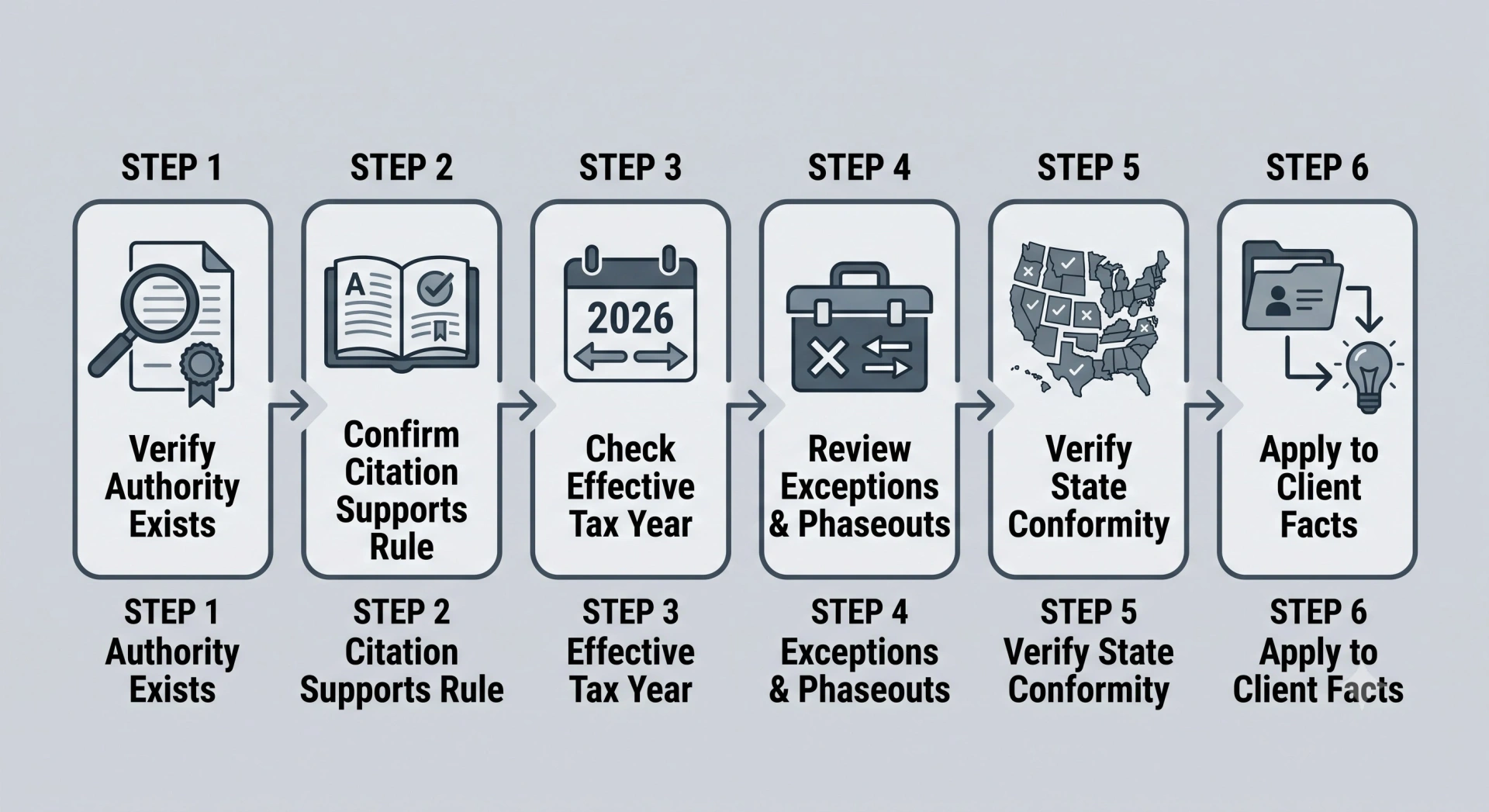
How to Verify AI-Generated Tax Research Before Using It
AI can accelerate tax research, but the final research trail still needs professional review.
Use the same verification process regardless of whether the answer comes from CPA Pilot, Claude, traditional tax software, or another AI system.
1. Verify the Cited Tax Authority
Open the source and confirm that the Code section, regulation, ruling, case, or state guidance actually exists.
2. Confirm the Citation Supports the Conclusion
Read the relevant provision. A citation to a related topic is not enough. The cited language should support the specific proposition made in the research.
3. Check the Tax Year and Effective Date
Tax rules can change between years.
A provision that applies in 2026 may not apply to a 2024 return. Check effective dates and subsequent legislation before relying on the result.
4. Check Exceptions, Limitations, and Cross-References
Tax provisions frequently contain separate:
thresholds
phaseouts
elections
ownership tests
holding periods
related-party rules
industry rules
definitions
exceptions
An answer that identifies the general rule but misses a controlling exception is incomplete.
5. Verify State Tax Treatment
Federal treatment does not automatically determine state treatment.
Check conformity, state modifications, separate state elections, sourcing rules, nexus requirements, and other jurisdiction-specific provisions where relevant.
6. Apply the Authority to the Client's Facts
The final research question is not simply:
What does IRC §X say?
It is:
How does IRC §X, its regulations, related authority, and state treatment apply to this taxpayer, transaction, tax year, and jurisdiction?
That step requires professional judgment.
Federal vs State Tax Research: How AI Handles SALT Issues
State and local tax research makes generic AI answers more difficult to rely on.
A system can correctly identify the federal treatment and still produce an incomplete result if the state does not conform or applies a different rule.
State Tax Conformity With Federal Law
States do not incorporate every federal tax change in the same way.
A state may:
conform automatically
conform only as of a fixed date
decouple from a federal provision
require a state adjustment
apply a different effective date
Consider depreciation under IRC §168(k).
Determining the federal treatment is only the first stage. A complete research process may require:
Federal provision → taxpayer's state → conformity rule → state modification → state guidance → client-specific result
CPA Pilot states that its research coverage includes all 50 states plus Washington, D.C. Its state and multistate tax planning guide provides additional discussion of state exposure, nexus, and multijurisdictional planning.
Claude can also research state tax sources, but the practitioner generally needs to direct the investigation across each relevant jurisdiction.
Nexus and Multistate Tax Research
State research becomes more complex when a business has:
remote employees
online sales
customers in multiple states
travelling employees
property in multiple jurisdictions
pass-through owners located in different states
These facts can create separate questions involving income tax nexus, sales tax nexus, sourcing, withholding, entity-level taxes, and filing requirements.
For multistate work, the value of an AI research system depends heavily on whether it consistently moves beyond the federal answer and identifies the relevant state issues.
CPA Pilot vs Claude: Real-World CPA Tax Research Use Cases
The practical difference between the platforms becomes clearer when both are applied to the same type of work.
Scenario 1: Researching a Complex Individual Tax Issue
Consider a deduction that depends on income limits, eligibility rules, and taxpayer-specific facts.
Claude can explain the rule, research current information, reason through the scenario, and provide citations when research tools are enabled.
CPA Pilot can route the question through a tax-specific research workflow and organize relevant authorities for review.
The meaningful comparison is not time to first answer.
It is time for a verified answer that the preparer or reviewer can reproduce.
Scenario 2: Summarizing a Long IRS Document
Long-document analysis is one of Claude's strongest use cases.
A CPA can upload a lengthy IRS document and ask Claude to:
summarize requirements
extract definitions
compare sections
identify deadlines
explain technical language
For pure document comprehension, Claude may be sufficient.
When the task moves from understanding a document to supporting a tax position with related federal or state authority, a dedicated tax research workflow may reduce the additional research required.
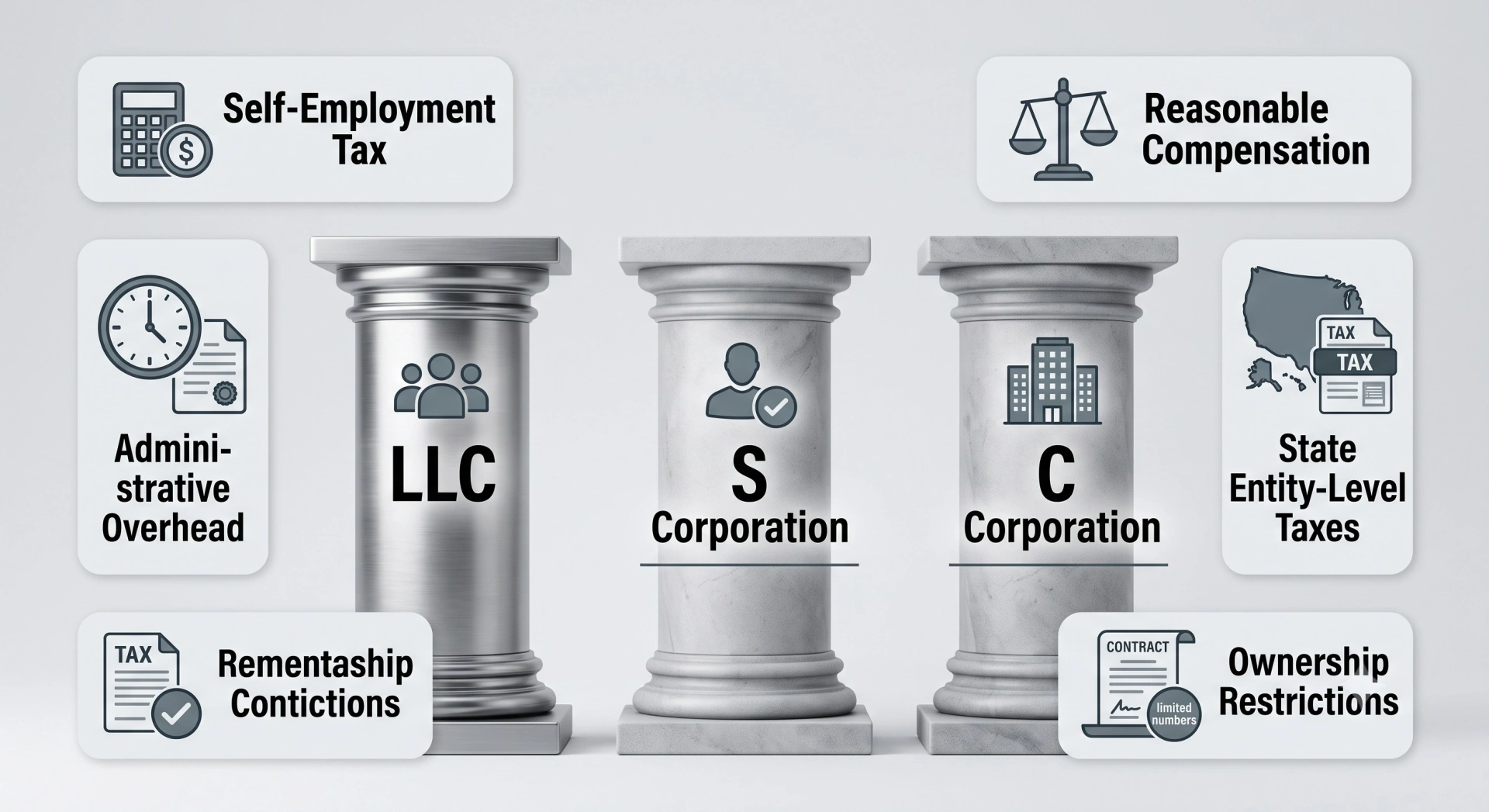
Scenario 3: Choosing an Entity for a Business Owner
An LLC, S corporation, or C corporation comparison can involve:
federal income tax
self-employment tax
reasonable compensation
payroll requirements
state taxes
ownership restrictions
administrative costs
distributions
future growth plans
Claude can analyze these factors when given sufficient facts and direction.
CPA Pilot provides a dedicated entity-selection workflow designed around this recurring CPA advisory task.
The advantage of a structured workflow is consistency. Important factors do not depend entirely on the prompt created by each staff member.
CPA Pilot vs Claude Security and Privacy for CPA Firms
AI security should be evaluated by product configuration, not brand name.
A CPA firm should understand what happens to:
uploaded returns
financial statements
client identifiers
prompts
generated outputs
connected data sources
CPA Pilot Security and Client Data Protection
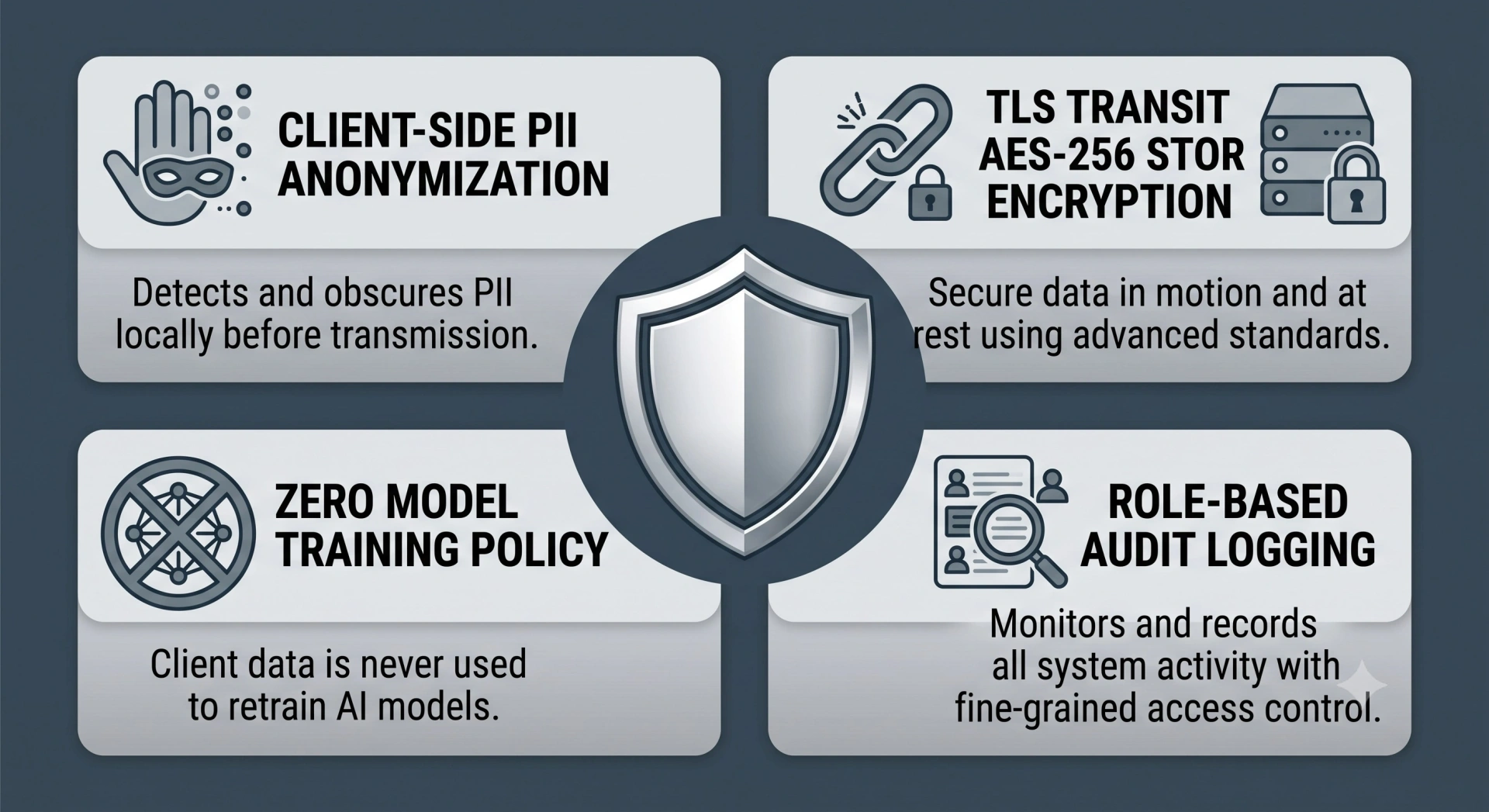
CPA Pilot states that client-identifying information is anonymized on the user's computer before transmission.
It also states that its security practices include TLS for data in transit, AES-256 encryption for stored platform data, access controls, audit logging, and restrictions on using uploaded documents, prompts, or generated outputs to train AI models.
Claude Consumer, Business, and Enterprise Data Controls
Claude should not be evaluated as a single security configuration.
Anthropic offers different consumer and commercial products, and the available retention, administrative, and data-governance controls can vary by plan.
The Claude pricing information used for this comparison lists:
Pro: $20 per month, or approximately $17 per month when paid annually
Team Standard: $25 per user per month, or $20 with annual billing
Team Premium: $125 per user per month, or $100 with annual billing
Enterprise: seat pricing plus usage charges under the applicable commercial terms
Pricing changes over time, so firms should verify Claude's current pricing directly with Anthropic before making a purchasing decision.
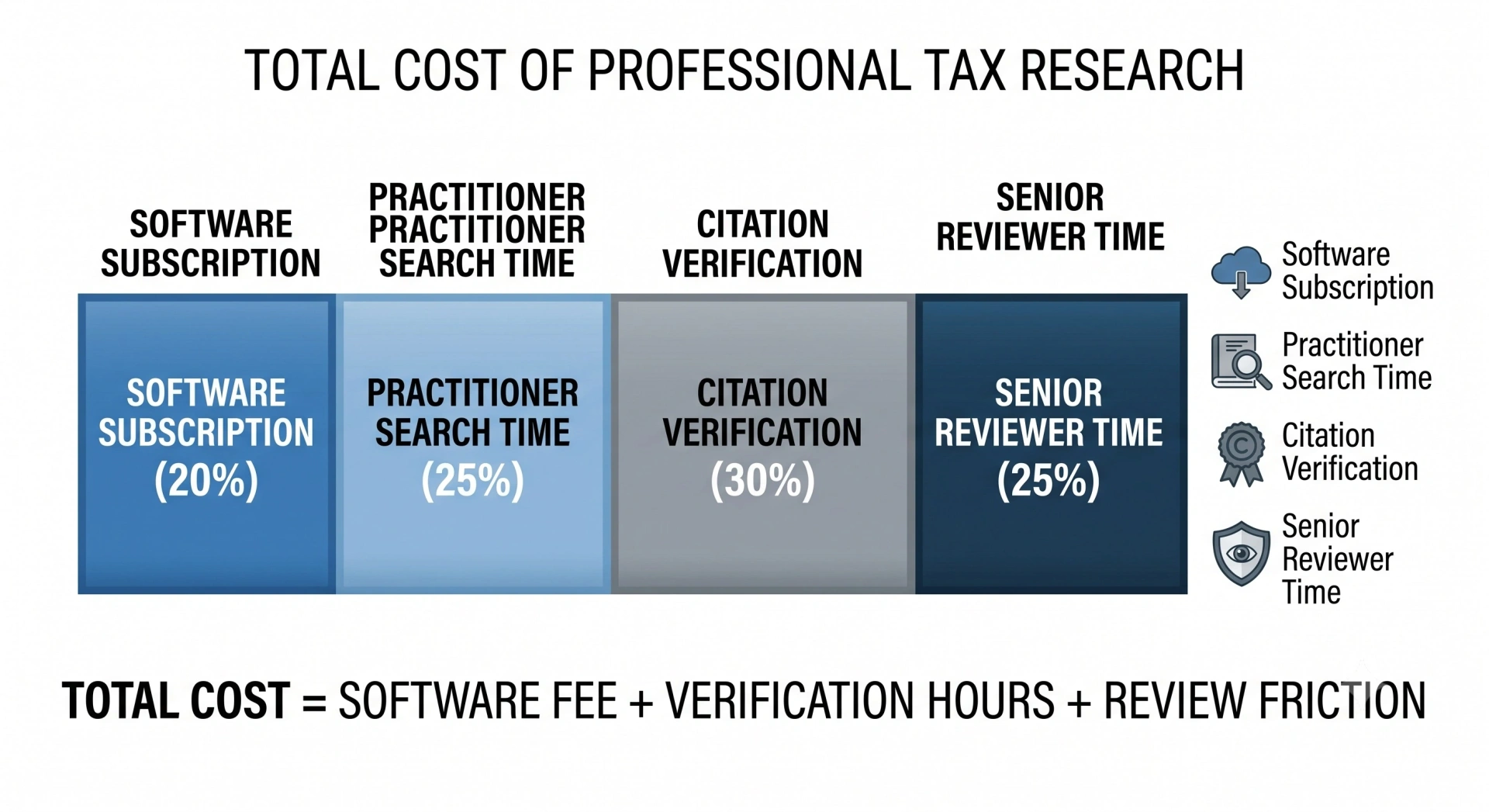
Subscription price alone does not determine the cost of professional tax research.
A more useful measure is:
Total research cost = software cost + practitioner research time + citation verification + reviewer time + rework
A cheaper subscription can still create a more expensive workflow if staff must repeatedly locate missing authority or reconstruct the research trail.
How to Run a Tax Research Trust Test Before Choosing Either Tool
Do not select an AI tax research tool based only on a vendor demonstration.
Run the same realistic tax questions through each system and compare the resulting research trail.
Useful tests include:
a current-year federal threshold to test freshness and effective dates
an IRC §199A scenario to test limitations, SSTB rules, and relevant authority
an IRC §1031 transaction to test qualifying property, timing requirements, and exceptions
an entity-selection question to test assumptions and competing tax consequences
a state-conformity question to test whether the system moves beyond the federal rule
For each test, determine whether the system reaches the correct conclusion, identifies appropriate authority, supports its claims with valid citations, uses the correct tax year, recognizes major exceptions, checks state treatment where necessary, states assumptions, and produces research another practitioner can reproduce.
Measure time to verified answer, not simply time to generated answer.
CPA Pilot vs Claude for Tax Research: Final Verdict for 2026
CPA Pilot is the more specialized choice for recurring professional U.S. tax research.
Its advantage comes from workflows designed around federal and state tax sources, structured research notes, CPA-specific tasks, tax planning, return review, and repeated professional use.
Claude is the broader AI platform.
It is particularly strong for long-document analysis, general research, cross-domain reasoning, technical explanation, and writing.
The best choice therefore depends on the firm's primary bottleneck.
Choose CPA Pilot when the work repeatedly requires moving from:
client facts → tax issue → authority → limitations → state treatment → professional conclusion
Choose Claude when the work depends more heavily on:
Some firms may use both. Claude can help analyze a large or complex body of information, while a dedicated tax workflow can help organize the authorities supporting the eventual tax conclusion.
Regardless of the software, the CPA or EA remains responsible for evaluating the authority, applying it to the client's facts, and exercising professional judgment.
CPA Pilot vs Claude FAQs for CPAs in 2026
Can CPAs Use Claude for Tax Research?
Yes. CPAs can use Claude to research tax topics, summarize tax documents, analyze scenarios, search current information when the relevant tools are enabled, and produce citations. Practitioners should still verify material conclusions against applicable statutes, regulations, administrative guidance, judicial authority, and state sources.
Can Claude Access Current Tax Laws?
Claude can access current web information when appropriate web or research capabilities are enabled. Tax professionals should still confirm the controlling provision, tax year, effective date, and subsequent authority before relying on the result.
Does Claude Provide Tax Research Citations?
Claude can provide citations when web search or research capabilities are used. A CPA should verify that each citation supports the claim and represents appropriate tax authority. A link to a secondary article does not carry the same authority as an applicable statute, regulation, ruling, or judicial decision.
Is Claude Safe for Client Tax Documents?
Claude's data controls depend on the product tier and configuration. Consumer, commercial, and Enterprise deployments can have different retention, administrative, and data-use policies. Firms should review their exact configuration and Anthropic's current contractual and privacy terms before uploading confidential tax information.
Does CPA Pilot Cover State Tax Research?
CPA Pilot states that its tax research workflow covers all 50 states plus Washington, D.C., including state conformity, nexus, state-specific adjustments, and state guidance.
What Tax Sources Does CPA Pilot Use?
CPA Pilot states that its research workflow can draw from the Internal Revenue Code, Treasury Regulations, IRS Publications, Revenue Rulings, Private Letter Rulings, and state tax guidance, then organize relevant references for practitioner review.
Can Claude Replace Professional Tax Research Software?
Claude can perform substantial research, reasoning, web retrieval, and document analysis. Whether it can replace dedicated tax research software depends on a firm's requirements for source coverage, SALT research, repeatable workflows, governance, citation verification, and professional review.
Disclaimer: This article is provided for educational and informational purposes and does not constitute individual tax, legal, or accounting advice. Tax laws, regulations, administrative guidance, software capabilities, prices, and vendor policies can change. Tax professionals should independently verify applicable authority and current vendor documentation before relying on information for a client matter.
Key Takeaways
4 essential insights
Choose tools that produce verifiable citations, not just polished explanations.
Use CPA Pilot for recurring U.S. tax workflows and structured research notes.
Rely on Claude for broad research, writing, and long-document analysis tasks.
Prioritize tax-year accuracy and state-specific rules when applying guidance to facts.
I’m Harsh Mody, CPA, founder of CPA Pilot—an AI Tax Assistant for CPAs, Enrolled Agents, and U.S. tax firms. With 18+ years in accounting, tax auditing, consulting, and product management, I’ve seen how compliance-heavy work limits true advisory impact. I built CPA Pilot to change that—by applying AI-driven tax research, deduction optimization, and IRS/state code automation to help firms unlock tax savings and scale advisory services with speed and accuracy.


![Black Ore Alternative for CPAs - CPA Pilot vs Black Ore [2026 Comparison]](/_next/image/?url=%2Fuploads%2Fblack-ore-alternative-017d2a91.webp&w=3840&q=75)